We know that the Old Testament took place in the context of the desert. That’s not precise enough. It actually took place in the context of desertification—the onset or increase of the desert landscape.
The Bible cannot be understood without knowing the implications of this crucial difference.
The Middle East wasn’t always a desert. Prior to about 4000 BC it was grassland with rivers supporting vegetation, birds, large mammals—and people. Geographer James DeMeo, author of Saharasia—The 4000 BCE Origins of Child Abuse, Sex Repression, Warfare and Social Violence in the Deserts of the Old World, charts humanity’s descent into the nightmare of desertification in great detail.
The threat of desertification looms large over the Old Testament.
“A bronze roof”
Deuteronomy contains strikingly poetic passages about desertification:
“The Lord will make the sky overhead seem like a bronze roof that keeps out the rain, and the ground under your feet will become as hard as iron. Your crops will be scorched by the hot east wind or ruined by mildew. He will send dust and sandstorms instead of rain, and you will be wiped out.” (Deuteronomy 28:21-24)
Equally cheerful, Deuteronomy 29:22-23 reads: “The Lord will strike your country with diseases and disasters. Your descendants and foreigners will see that your land has become a scorching desert of salt and sulphur, where nothing is planted, nothing sprouts, and nothing grows.”
Some psalms reflect this concern: “God kept crops from growing until food was scarce everywhere in the land.” (Psalms 105:16) Others give thanks for water: “You send showers of rain to soften the soil and help the plants sprout.” (Psalms 65:10) “Desert pastures blossom… valleys overflow with grain and echo with joyful songs.” (Psalms 65:12-13)
The prophets
Isaiah and Jeremiah repeatedly invoke the fear of desertification. It lends a shrill note of panic to their words: “There will be so few trees that even a young child can count them.” (Isaiah 10:19) “There has been no rain, and farmers feel sick as they watch cracks appear in the dry ground.” (Jeremiah 14:4) “Edom’s streams will turn into tar and its soil into sulphur… Edom will be a desert, generation after generation.” (Isaiah 34:9-10)
Jeremiah links desertification to God’s anger: “I said to the Lord, ‘None of us can understand why the land has become like an uncrossable desert. Won’t you explain why?’ The Lord said: I destroyed the land because the people disobeyed me and rejected my laws and teachings.” (Jeremiah 9:12-13)
And, more heatedly: “When he could no longer put up with your disgusting sins, he placed a curse on your land and turned it into a desert, as it is today.” (Jeremiah 44:22) The land lived; you sinned; the land died. The Old Testament is one long plea to stop sinning so that God will stop desertification.
Traces
Traces of the region’s pre-desert geography remain.
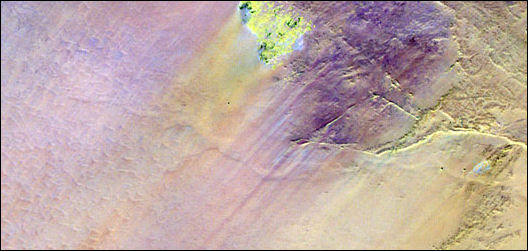
An image of Saf-Saf Oasis in south-central Egypt, taken by the space shuttle Columbia in 1995 using an infrared camera, the Landsat Thematic Mapper, shows the present-day oasis as a small green smear against the yellow-mauve backdrop of the desert—the “bronze roof” so eloquently described in Deuteronomy.
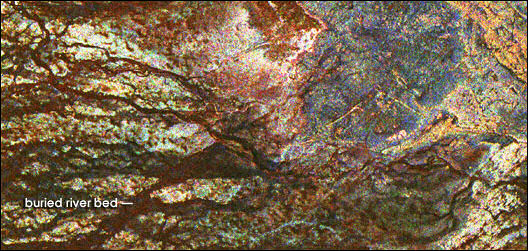
An identical image, taken using Synthetic Aperture Radar able to penetrate two metres of sand, reveals a buried river system that once supported vegetation, large mammals, birds—and people.
Even in the heart of the Sahara, in southern Libya, lakes were numerous until about 4000 BC. From then onwards the region slowly turned to desert. The inhabitants didn’t know when—or even if—it would stop.
Fossils of elephants and giraffes found in the region have been dated to as recently as 2000 BC (James DeMeo, Saharasia)—just before Abraham arrived in Palestine and about 300 years before Jacob’s descendants were enslaved in Egypt. (Biblical dates are from the chronology in The Poverty & Justice Bible, Contemporary English Version.)
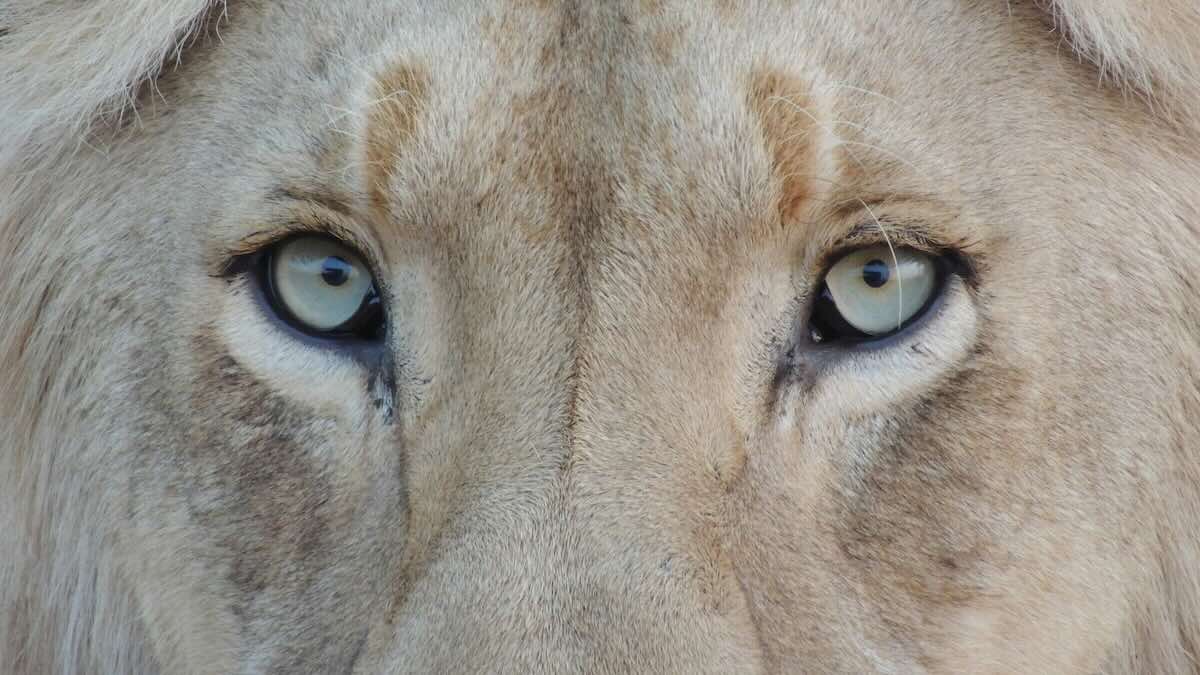
The Old Testament contains over 100 references to lions, including Samson tearing one apart “with his bare hands.” (Judges 14:6) Judges is dated to c. 1200 BC. Yet the New Testament barely mentions lions, aside from visions in Revelation. Lions disappeared from the Middle East along with the grass and the mammals they preyed on.
Mineral deposits in stalagmites from a cave in northern Iraq reveal a ‘mega-drought’ around 675-550 BC—the time of the fall of Jerusalem and the Kingdom of Judah—which impacted the geopolitical balance and brought down the dominant Neo-Assyrian empire.
Tipping point
The spreading desert destroyed the relatively egalitarian, goddess-worshipping, hunter-gatherer and early agricultural cultures of the region. Crucially, it tipped the balance from sufficient to insufficient resources. For the first time in history, humans fought to survive.
This tipping point didn’t just alter the human psyche; it shattered it. It radically altered social structures, religions and—crucially—human psychology… and it completely shaped the meaning and purpose of the Old Testament.
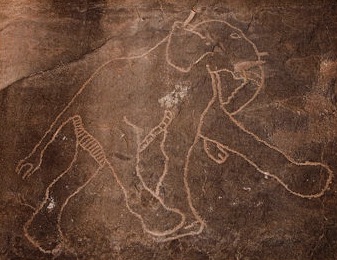
Geographer James DeMeo notes how North African rock art reflects this shift. Cave art at Tadrart Acacus in southern Libya from circa 7000 BC shows an elephant, drawn with shaded underbelly and crossed legs to create a 3-dimensional effect. The daytime temperature at Tadrart Acacus is now around 82° Celsius—heat no elephant could survive.
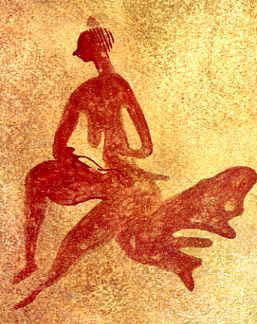
Cave paintings from about 4000 BC at Tassili N’ajjer in Algeria depict domestic situations including breastfeeding and lovemaking. The name Tassili N’ajjer means ‘plateau of waters’ in the Tuareg language; it’s now barren sand.
By the Late Bronze Age (c. 1200 BC) rock art in North Africa had changed from aesthetically sensitive images of domestic life to angular, 2-dimensional figures of warriors, weapons and chariots. This charts an emotional regression described by psychology lecturer Steve Taylor as “the main event in human history”:
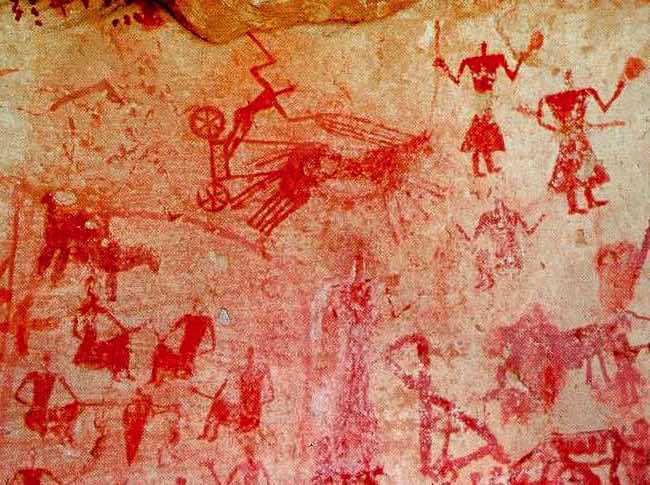
This is the time of the conquest of Canaan and the first Israelite kings:
“While King Hadadezer of Zobah was trying to gain control of the territory near the Euphrates River, David met him in battle at Hamath and defeated him. David captured one thousand chariots, seven thousand chariot drivers, and twenty thousand soldiers.” (1 Chronicles 18:3-4)
Not only warriors were captured: “Moses and Eleazar followed the Lord’s instructions and listed everything that had been taken from the Midianites. The list included 675,000 sheep and goats, 72,000 cattle, 61,000 donkeys, and 32,000 young women who had never had sex.” (Numbers 31:31-35)
These numbers may be genuine, over-inflated for myth-making purposes, or specifically chosen to fit an alphanumeric cipher, which Hebrew sages used extensively. Regardless, they reflect a time of endemic violence, fear, and trauma.
This radical shift, from peaceful cultures like that at Tassili N’ajjer to the mass warfare and enslavement of King David’s time, is the traumatic backdrop of the Old Testament.
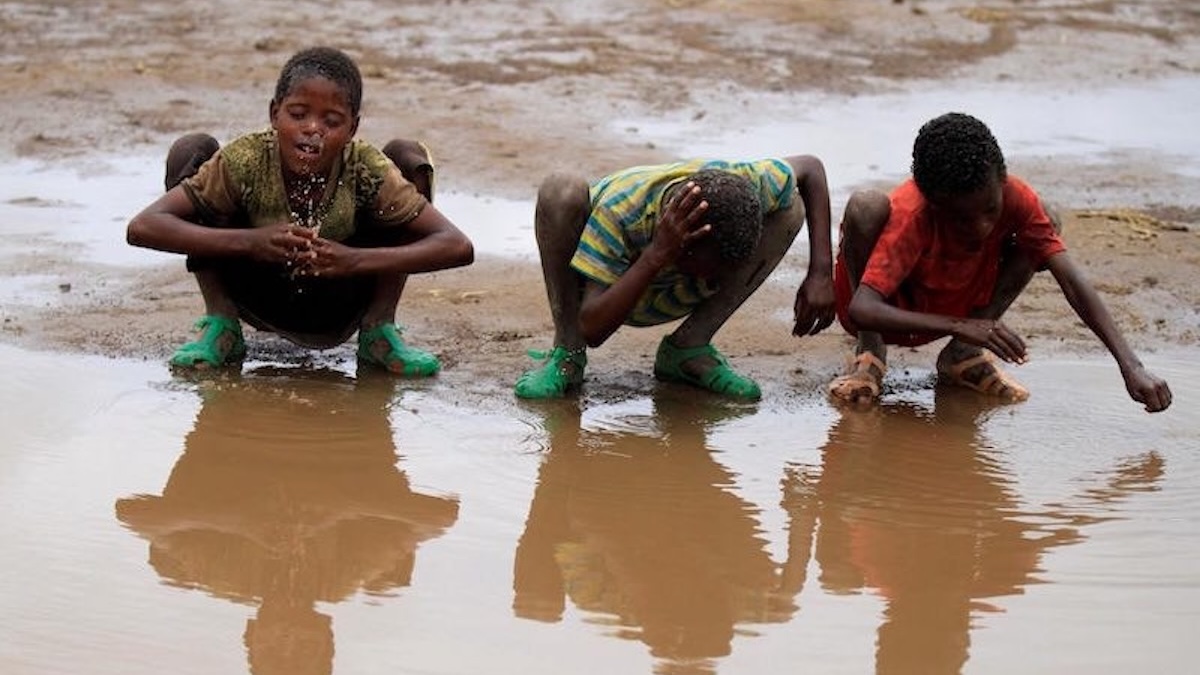
The cause was simple: famine.
Photo by Inbal Malca on Unsplash