The Bible tells us that the Fall was caused by Eve biting into an apple: “She wanted the wisdom that it would give her, and she ate some of the fruit.” (Genesis 3:6)
Oh, the irony.
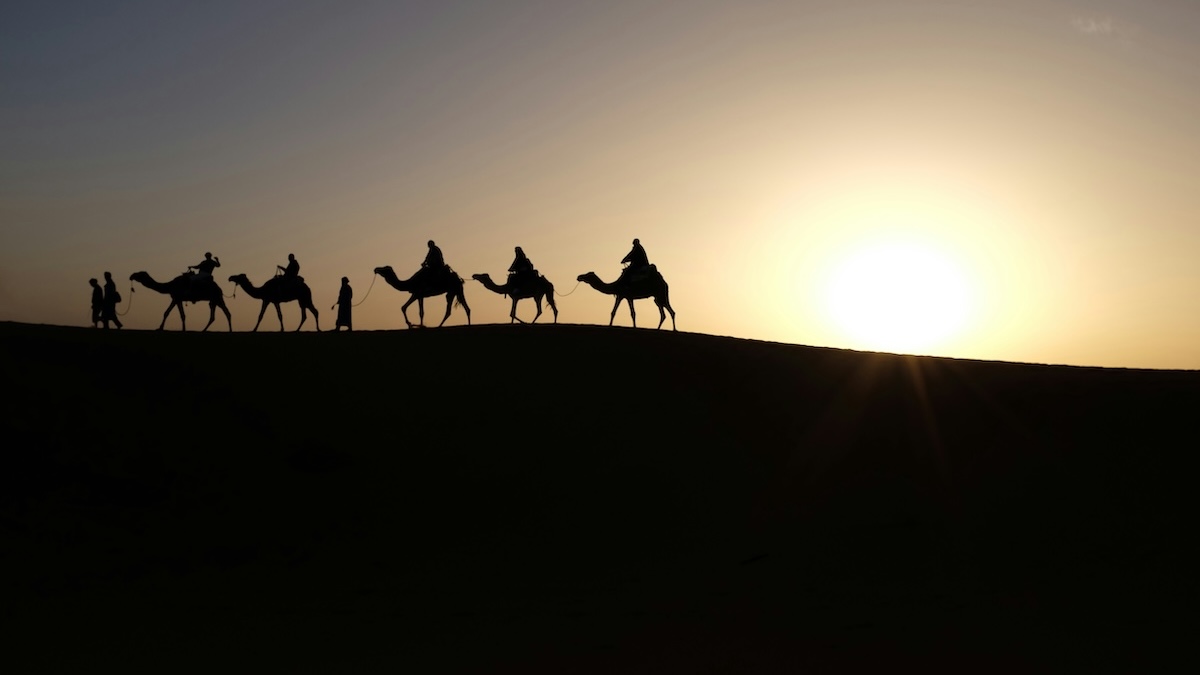
In Deuteronomy 28 – How climate change caused the Fall, I describe how long-term drought turned the Middle East to desert. This led to multi-generational famines that prompted violent competition for dwindling food resources.
Famine appears in both Books of Kings: “For three years no rain fell in Samaria, and there was almost nothing to eat anywhere.” (1 Kings 18:1-2) “The Lord has warned that there will be no food here for seven years.” (2 Kings 8:1).
The prophet Isaiah also warned of food shortages:
“There will be no more harvest celebrations or joyful and happy times, while bringing in the crops.” (Isaiah 16:9-10)
Social breakdown
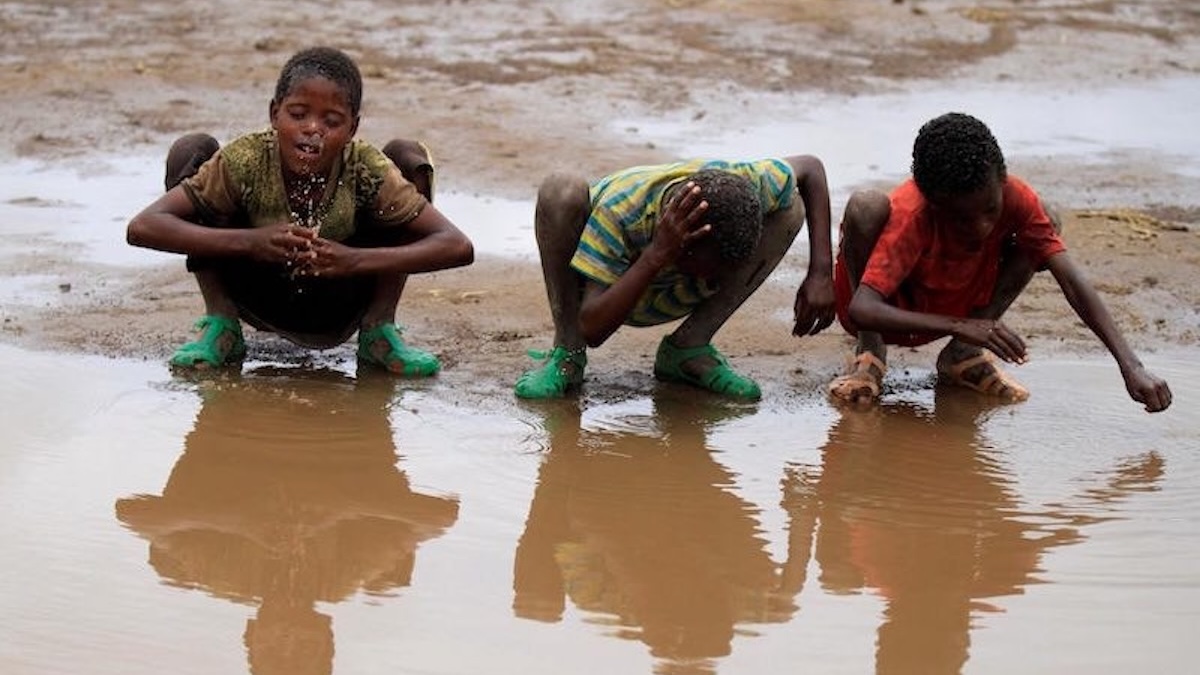
The traumatic impact of famine was observed as recently as the 1970s, when the Ik people of East Africa were driven into famine by conflict with neighbouring tribes. James DeMeo writes that “A passive indifference to the needs or pain of others manifested itself, and hunger, feeding of the self, became their all consuming passion.”
As social structures broke down, so too did emotional structures. Husbands abandoned their wives; women abandoned their children:
“The very old and young were abandoned to die. Brothers stole food from sisters, and husbands left wives and babies to fend for themselves. While the maternal-infant bond endured the longest, eventually mothers abandoned their weakened infants and children.” — James DeMeo, Saharasia
Famine can even stress adults into eating their own children. God threatens this punishment in Leviticus 26:29: “You will be so desperate for food that you will eat your own children.” This isn’t a random threat from a sadistic deity; it’s an accurate depiction of the psychological effects of famine.
“Interpersonal relationships may be broken down so completely that parents devour their own children; cannibalism has been reported during famine times in almost every part of the world…” — D. Carlson, Famine in History
Survival of the fittest
As the desert spread, competition intensified. DeMeo writes that “Those who were capable of the greatest violence would soon dominate remaining water and food resources.”
The Israelites’ occupation of Canaan is a case in point. “Soon you will cross the Jordan River, and if you obey the laws and teachings I’m giving you today, you will be strong enough to conquer the land that the Lord promised your ancestors and their descendants.” (Deuteronomy 11:8-9)
The conquest of Canaan gives a sense of how many peoples disappeared:
“They will possess the land of the Kenites, the Kenizzites, the Kadmonites, the Hittites, the Perizzites, the Rephaites, the Amorites, the Canaanites, the Girgashites, and the Jebusites.” (Genesis 15:19-21)
This scenario repeated as patriarchies gradually conquered the world—from Babylon to Rome to Genghis Khan, to European colonial dominions and today’s global financial empires.
(See James DeMeo’s Saharasia for data maps showing the origins of patriarchy in a belt running from North Africa through the Middle East to Central Asia, and its spread into Africa, Asia, Europe, the Americas and the Pacific.)
Strongman leaders
Men abdicated emotional self-responsibility to obey brutal leaders. DeMeo writes: “History shows that droughts and famine have driven people out of the desert in large groups organized around strongman leaders.”
Genocide was the rule rather than the exception. “Don’t have any pity. Kill their men, women, children, and even their babies.” (1 Samuel 15:3)
“Menahem then became king… He killed everyone living in Tiphsah, and with his sword he even ripped open pregnant women.” (2 Kings 14-16)
These leaders soon became kings: “Now we want a king to be our leader, just like all the other nations.” (1 Samuel 8:5) The Israelites’ first king was Saul (c. 1030-1010 BC).
Victimization
Societies stratified from strongest to weakest. Male domination was the most obvious characteristic, but its key dynamic was that everyone—regardless of gender—victimized everyone they could get away with victimizing. God tells Jeremiah: “Everyone takes advantage of everyone else…” (Jeremiah 9:6)
Victimization began at home: “[King Xerxes] said that husbands should have complete control over their wives and children.” (Esther 1:22) “Slaves that you treat kindly from their childhood will cause you sorrow.” (Proverbs 29:21)
People met their needs—for food, money, love, sex, whatever—by finding someone or something to victimize and then extracting every drop to fill the endless dread of future famine. This unconscious extraction remains humanity’s default setting. It underlies our ability to strip nature bare and blinds us to the catastrophic consequences.
All of the psychological patterns that developed in response to long-term famine are still with us today, in watered-down form. The modern human psyche runs on the bedrock of 6,000-year-old coping mechanisms—patterns that cannot be transplanted to the New Earth.
But the most obvious sign of this new social landscape was the dominion of masculine over feminine.