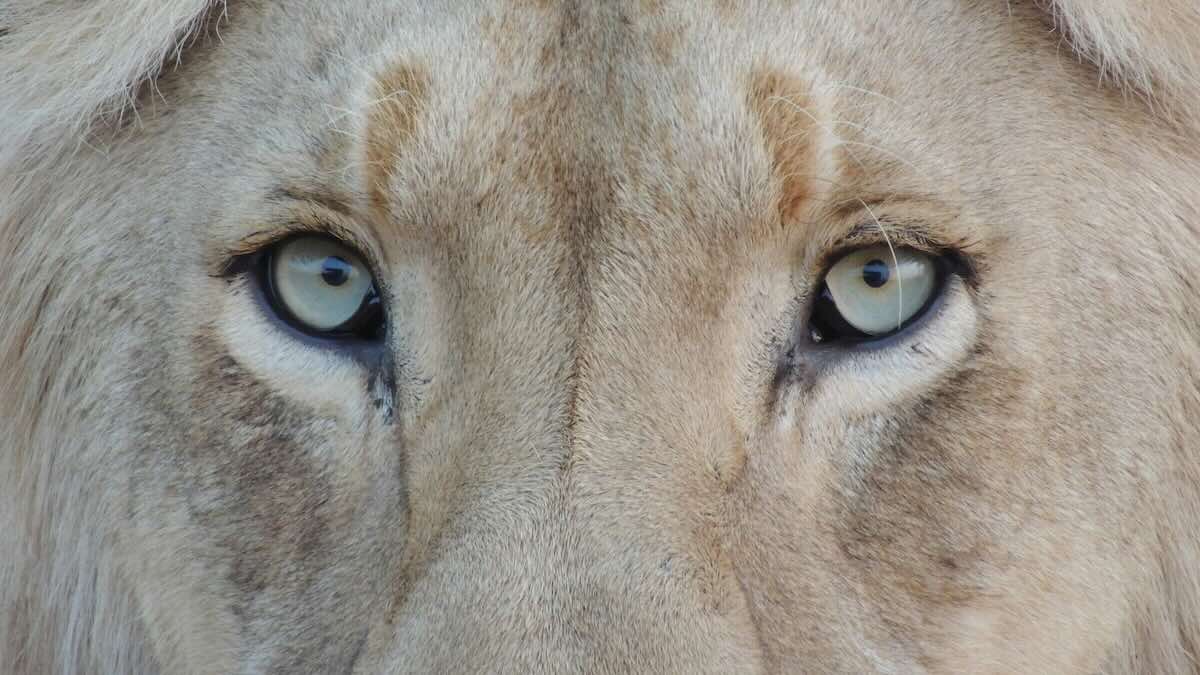
The Book of Judges is one of the most colourful books in the Bible. And one of its most colourful stories is that of Samson—the long-haired man of superhuman strength who wrestled a lion. It’s a story we’re all familiar with, but is it true?
In 2012, archaeologists from the university of Tel Aviv discovered a stone seal, the size of a small coin, in a house in Beth Shemesh, Israel. The seal appears to show a long-haired man slaying a lion. The seal is dated to the 12th century BC—a similar time to the Book of Judges.
Archaeologists Shlomo Bunimovitz and Zvi Lederman downplayed the idea the seal might represent the biblical Samson. They emphasised instead that “a story was being told at the time of a hero who fought a lion,” a story that eventually made its way into the Bible.
While this discovery doesn’t confirm the literal existence of Samson, finding a stone seal of a lion in Israel points to an elephant in the room. Or, more accurately, a lion in the room.
Lions? In Israel?
Lions in the Bible
The Contemporary English Version of the Bible contains 118 references to lions. Of those, only 9 are in the New Testament. They all refer to leonine qualities, not to actual lions.
The Old Testament contains several references to lions as wild and dangerous beasts. “As Samson and his parents reached the vineyards near Timnah, a fierce young lion suddenly roared and attacked Samson.” (Judges 14:5)
1 Samuel 17:34 refers to sheep being dragged off by lions or bears—another creature not known in the Middle East today. 1 Kings 13:24 reads: “The prophet from Judah left. Along the way, a lion attacked and killed him, and the donkey and the lion stood there beside his dead body.” Isaiah 15:9: “All in Moab who escape will be attacked by lions.”
Yet, by the time of Jesus, lions were no longer a danger. Between the Old Testament and the New, lions disappeared from the physical landscape of the Bible.
What happened?
Desertification
In a word: desertification. The emergence or spread of desert.
The Middle East wasn’t always a desert. In Saharasia, geographer James DeMeo describes how prior to about 6000 BC it was grassland with river systems that supported vegetation, large mammals (including lions), birds—and people. Gradually, over several millennia, it turned to desert. By 4000 BC the desert environment we know today had become entrenched.
Desertification is the great unseen backdrop of the Bible in general and the Old Testament in particular. This story—the greatest in human history—didn’t unfold in a desert landscape. It unfolded in a landscape that was slowly turning to desert.
The difference is crucial to understanding the frightened mentality behind the Bible.
“A bronze roof”
Deuteronomy contains strikingly poetic passages about desertification:
“The Lord will make the sky overhead seem like a bronze roof that keeps out the rain, and the ground under your feet will become as hard as iron.” (Deuteronomy 28:21-23)
Isaiah 15:6 reads: “The streams of Nimrim and the grasslands have dried up. Every plant is parched.” Lions live in grasslands. As they dried up, the lions left through habitat loss.
The people who inhabit the Bible’s stories were not living in a static environment. They were dealing with climate change in a real and palpable way, just as we are today. Living in this slowly dying environment was a traumatic experience that gradually altered humanity.
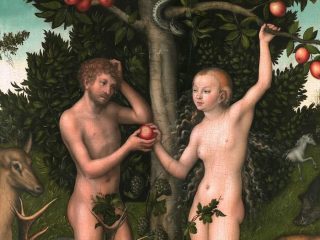
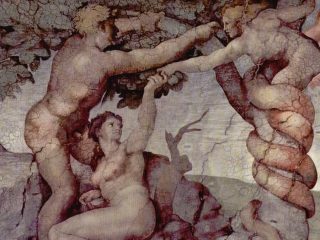
Adam and Eve weren’t kicked out of the Garden of Eden. Due to climate change, the garden crumbled to dust around them. And that means the Bible, including its disappearing lions, is a whole other story to what we’ve traditionally been told.
When we understand that the entire Bible took place in the context of desertification, we see the Old Testament’s key scene—the Fall—in a new light: on-going, multi-generational trauma that has passed down to us and is only now surfacing for resolution.
We stand at a crossroads: resolve the trauma of the Fall and enter the New Earth—or perish through the ongoing emotional desertification that was instigated by the Fall.
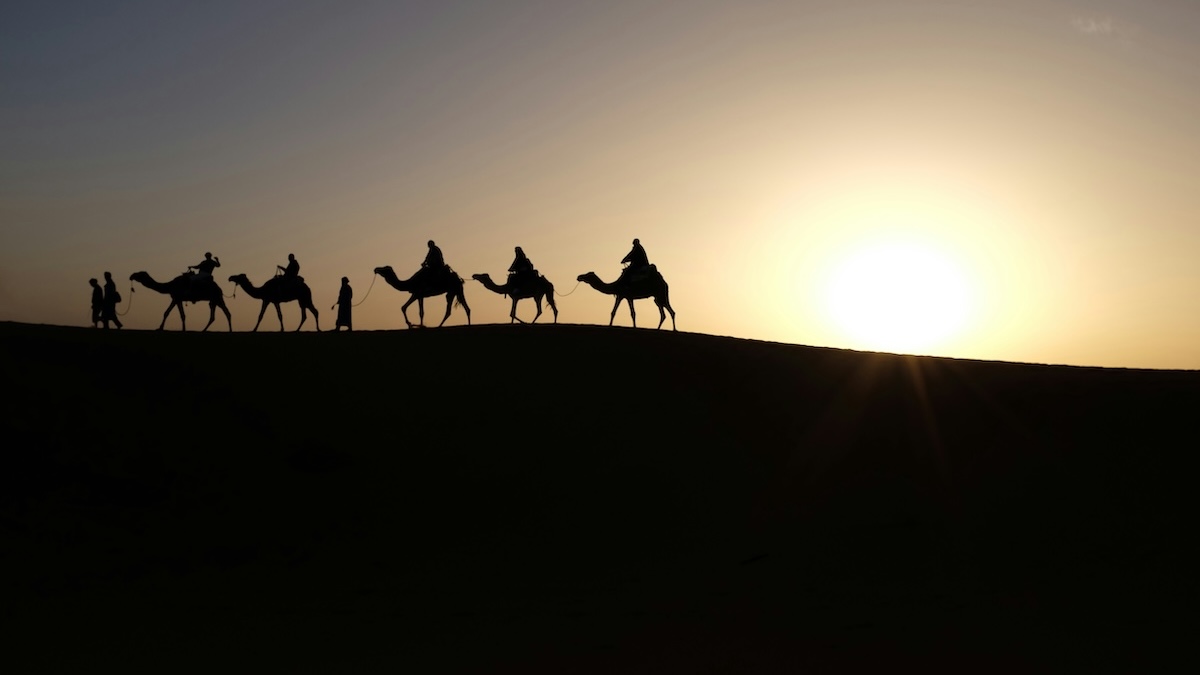
Photo by Corentin Marzin on Unsplash




1 comment